"Made in Italy" sells. That is exactly why you should slow down when you see it on a product page. The phrase can describe a workshop where a leatherworker cuts, stitches and stamps every item by hand, or a supply chain where only the final laser pass happens on Italian soil. Both can be legal. Only one is what you thought you were buying for your father's fiftieth birthday.
The good news is that authenticity leaves fingerprints. Not the vague, romantic kind, but actual, checkable details. Here is what to look for before you add a personalized gift to your cart.
Start with the workshop, not the product photo
Most shoppers scroll straight past the About page. Go there first. A real workshop tends to name things: the family, the town, the year the bench was set up, the machine that does the engraving. You are looking for a street address, a company registration number, and photographs of work in progress. Cluttered benches, offcuts and a half-finished tray say more than a hero shot lit like a hotel lobby.
Then ask who personalizes the item. If the same workshop cuts the leather and stamps the initials, the listing usually says so, because it is the part they are proud of. If a shop sells leather wallets, ceramic mugs, wooden boards and silver bracelets and claims to make all of them, it is almost certainly decorating rather than manufacturing. That is not a scandal; plenty of good businesses work that way. But the product page should be honest about which parts are made where.
Lead times tell you something too. A workshop with a queue says so and gives you a range. A page that promises same-day dispatch on forty personalized items is telling you how they are made.
Read the material description like a contract
"Genuine leather" is a loose term. It tells you the material contains leather, not which layer of the hide you are getting or how it was treated. What you want is something specific enough to argue with.
- Leather: full-grain, top-grain or bonded; vegetable-tanned or chrome-tanned; thickness in millimetres. A maker who is proud of the hide names the tannery and the finish.
- Wood: the species (olive, walnut, oak, beech), whether it is solid or veneered, and how it is sealed: oil, wax or lacquer.
- Silver and metal: 925 sterling with a hallmark, or plating over brass. Plated pieces wear through at the edges and corners; sterling can be polished for decades.
- Ceramic and glass: hand-thrown or cast, engraved or printed. Printed decoration can wear in the dishwasher; true engraving does not.
There is a simple rule here. Specific words are a good sign; grand adjectives are not. "Vegetable-tanned full-grain leather, three millimetres, from a tannery outside Florence" tells you something. "Premium luxury artisan leather" tells you only which price bracket the shop is hoping for.
Zoom in on the finishing
Finishing is where a well-run workshop separates itself, and it is the part you can judge from your sofa if the photos are good enough. Zoom in before you decide.
Stitching and edges
On a stitched piece, look at the spacing. Machine work is fine, but the line should be even, set at a slight angle, with the thread sitting in the hole rather than floating across it. The back of the work should be as tidy as the front, which is where rushed production usually gives itself away. Edges should be painted or burnished in thin, even coats. Drips, gaps and a gummy texture show up fast in a close-up.
Engraving depth and letterforms
Laser engraving should have crisp edges and consistent depth across the whole name. On pale wood, watch for a brown scorch halo around the letters, a sign of a machine running too hot. On leather, over-burned engraving can smell for weeks; a careful workshop tests on an offcut of the same hide first. Hand engraving looks different: shallower, slightly irregular, with a visible cut and a bit of personality. Neither method is automatically better, but the listing should not pass one off as the other.
If every photo is a wide shot in soft shadow, ask for a close-up of the personalization area on the exact product you are ordering. A workshop with nothing to hide will send one within a day. A reseller will send a stock image or go quiet.
Personalization claims that hold up
Every method has limits, and honest listings respect them. A laser can produce hair-fine detail, but not on a surface smaller than a thumbnail. Hand engraving is slower and takes fewer characters per hour. Embossing needs heat, pressure and blank space around the letters. When a page lets you squeeze three lines of a poem onto a three-centimetre brass tag, the preview is doing something the machine cannot.
Look for these signs that a shop knows its own process:
- A stated character limit, plus a note on what happens as you approach it.
- A real preview: a photograph of the actual product with your text placed where the machine will place it, rather than your words floating in a generic font on a stock image.
- Clear handling of accents, apostrophes, ampersands and capital letters. Italian names and dedications often need them.
- An explicit policy on typos. Someone has to proofread, and you should know whether that person is you, them, or both.
One more test: ask to see a photo of the lettering on a similar piece from a past order. Many small workshops keep a folder of finished work and will share it happily. If they cannot show you a single example of the lettering style they are proposing, treat the mock-up as an illustration rather than a promise.
Six questions worth asking before you pay
- Who makes this item, and where does the personalization happen?
- What exactly is the material, and how is it finished?
- Can you send a close-up of the engraving area and the back of the piece?
- How is the text proofed, and will I see it before anything is cut?
- What is the realistic lead time, including shipping, and what happens if it arrives after the date I need it?
- If the spelling or spacing comes out wrong, who fixes it, and at whose cost?
Send two of these as a message before ordering. The reply will tell you more than the About page. Short, specific answers with a photo attached are the best signal you will get. Vague reassurance and pressure to order quickly are the opposite, especially on a gift with a date attached.
A five-minute check before you click buy
Run through this list once. Personalized items usually cannot be resold or returned, so the checking has to happen before the order, not after.
- The workshop is named, with an address and a way to reach a person.
- The material is described with specific terms rather than adjectives.
- At least one close-up shows stitching, edges, hardware or engraving in detail.
- The character limit is stated and your text fits comfortably inside it.
- You have seen a preview on the real product, or a photo of similar finished work.
- The delivery window is one you believe, and you have ordered with a week to spare.
Authentic Italian craftsmanship is not a logo or a phrase on a box. It is a set of small, verifiable facts: a tannery named, a stitch counted, a maker who answers email on a Tuesday morning. Look for those, and the gift you give will carry the story you actually wanted it to carry.
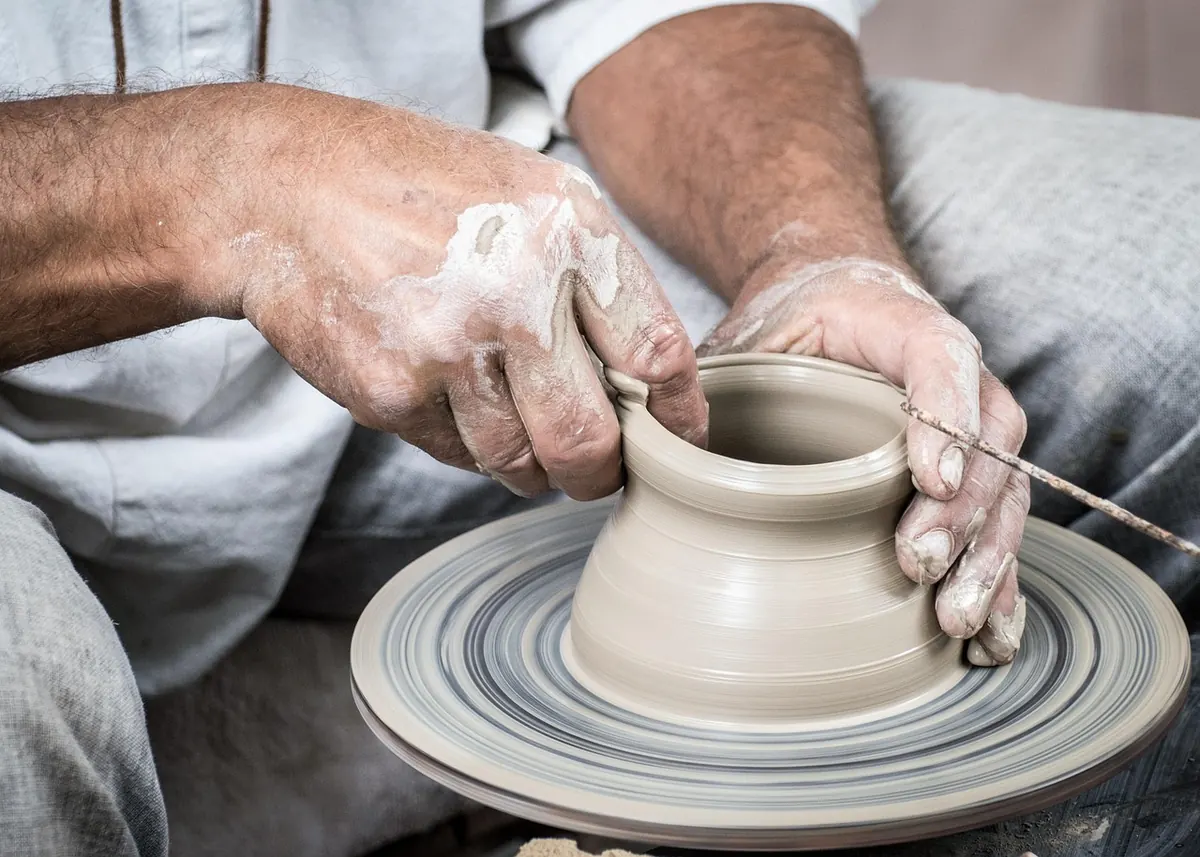
Photo: LubosHouska / Pixabay